
Greenhouse Automation System – Automatic Vent Openers & Shade Net Controllers
Automatically open vents and control shade nets inside your tunnel or greenhouse as temperature changes – no manual labour, no heat damage to your crop.
₨8,500.00
-
Pick up from the Woodmart Store
To pick up today
Free
-
Courier delivery
Our courier will deliver to the specified address
2-3 Days
Free
-
DHL Courier delivery
DHL courier will deliver to the specified address
2-3 Days
Free
-
Warranty 1 year
-
Free 30-Day returns

Payment Methods:
Description
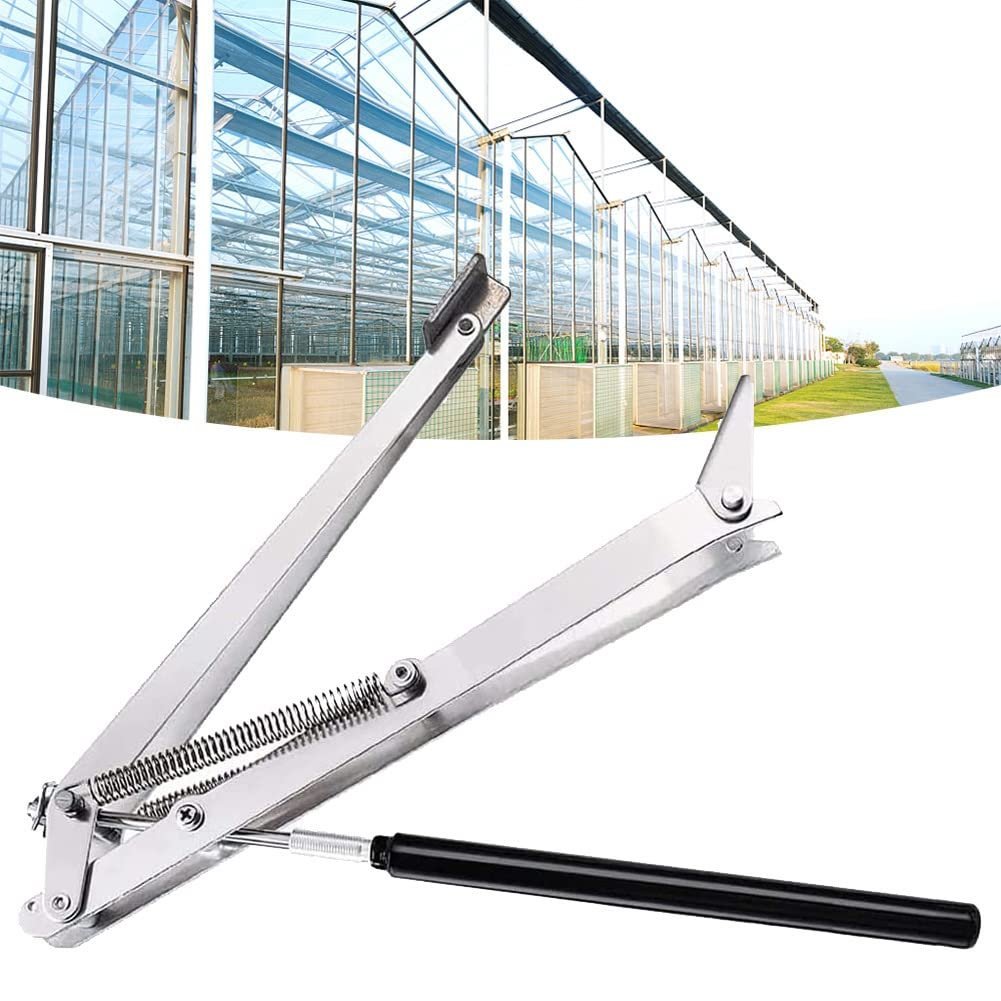
A greenhouse automation system replaces manual vent and shade handling with automatic, temperature-driven operation. The core is the automatic vent opener: a heat-sensitive hydraulic or wax-cylinder device mounted on the greenhouse roof vent that physically pushes the vent open as the inside temperature rises, and closes it as the temperature falls – with no electricity needed for the thermal versions. Alongside it, electric shade net controllers drive shade cloth curtains open and closed on a timer or temperature schedule.
This matters a lot for Pakistani tunnel farmers. In Punjab and KP, temperatures inside a closed polythene tunnel can shoot past 40°C by late morning, stressing or killing vegetable crops like tomatoes, cucumbers and capsicum. Most farmers vent their tunnels by hand, which means being present at exactly the right hours – and one missed morning can ruin a crop cycle. Automatic vent openers and shade controllers handle this on their own, opening vents when it gets hot and drawing the shade net during peak heat, then reversing at night.
The main benefits are steadier growing temperatures, lower labour dependence, and healthier crops with fewer heat-stress related diseases. Automated shading also extends the growing season: crops keep performing through the hot months when open-field farming stops, which is exactly when off-season prices are highest in local mandis.
A typical setup includes heat-sensitive vent opener units for roof or side vents, a shade net motor with controller, mounting brackets and hardware, and in motorised versions a solar panel or mains power connection. Controllers can be simple thermostat-based units or programmable digital panels that manage multiple vents and shade zones.
This system is for tunnel farmers growing high-value vegetables (tomato, cucumber, capsicum, chillies), nursery growers raising seedlings in controlled sheds, and anyone running a small to mid-size greenhouse who cannot afford to station labour at the tunnel all day. It is a practical first step into automation before investing in a full climate controller.
Key Features
- Heat-sensitive automatic vent openers that open and close roof vents as temperature rises and falls
- Shade net / thermal screen motor controllers with programmable open-close timing
- No manual labour required – vents respond automatically even when you are not at the farm
- Prevents midday heat damage inside tunnels during Punjab summers
- Works with existing polythene tunnels and commercial greenhouses
- Solar-powered opener options available for farms without reliable electricity
- Lifts heavy vents smoothly with double-spring thermal cylinder design
- Adjustable opening range to match different crop temperature needs
Specifications
| lifting_capacity | Up to ~7 kg per vent opener (double-spring thermal type) |
|---|---|
| motor_voltage | 24V DC (motorised shade controllers); thermal openers need no power |
| opening_range | Adjustable, typically 15-30 deg C activation |
| power_options | Solar panel or 220V mains for motorised units |
| vent_compatibility | Roof vents and side vents of polythene tunnels and polycarbonate greenhouses |
How to Use
- Mount the automatic vent opener on the greenhouse roof vent or side vent following the included bracket instructions.
- Adjust the temperature set point on the controller (typically 20-30°C) according to your crop stage.
- Connect the shade net motor controller to the shade cloth curtain system and set the shading schedule.
- Power the system (solar panel or mains supply) and run a manual test cycle to confirm all vents open and close fully.
- Monitor for 2-3 days during peak heat hours (11am-3pm) and fine-tune temperature and shading thresholds.
- Inspect monthly: clean dust off sensors and solar panels, lubricate moving arms, and check for worn cables or brackets.

Reviews
Clear filtersThere are no reviews yet.