
Petri Dishes & Rapid Plant Disease Test Kits — On-Site Diagnosis Bundle
Sterile petri dishes plus rapid plant disease test kits — detect viruses and pathogens in your crop within minutes, right in the field or nursery. Built for pathology labs, nurseries, and seed companies.
₨15,000.00
-
Pick up from the Woodmart Store
To pick up today
Free
-
Courier delivery
Our courier will deliver to the specified address
2-3 Days
Free
-
DHL Courier delivery
DHL courier will deliver to the specified address
2-3 Days
Free
-
Warranty 1 year
-
Free 30-Day returns

Payment Methods:
Description
The Petri Dishes & Rapid Plant DNA Test Kits bundle brings real disease diagnosis down to field level. It combines sterile petri dishes — the basic tool for handling, culturing, and observing plant samples — with rapid test kits that detect plant pathogens (viruses, bacteria, and fungi) directly from a crushed leaf or seed sample, with results visible in minutes.
In Pakistan, most crop disease diagnosis is still done by eye — a farmer or shopkeeper guesses from leaf spots and yellowing, and sprays whatever pesticide the dealer suggests. Wrong guesses waste money on the wrong chemical and let real infections spread. Rapid pathogen tests change that: a nursery can confirm a virus before selling plants, a pathology lab can screen seed lots for seed-borne disease, and a seed company can prove its seed is clean.
The key benefits are speed, accuracy, and cost control. Instead of sending samples to a distant lab and waiting a week, a pathology technician or nursery manager gets a yes/no answer on the spot. Early, confirmed detection means targeted treatment — less pesticide, less resistance, healthier crops. For seed companies and exporters, documented clean-seed testing is increasingly part of buyer requirements.
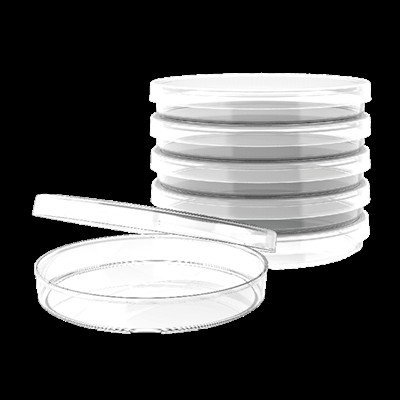
The bundle typically includes a pack of sterile disposable petri dishes (standard 90mm size), rapid test strips or cassettes for common plant pathogens with extraction buffer bags, a user guide with result interpretation, and sample collection guidance. Exact test types and strip counts vary by bundle — confirm the included panel before listing.
It is made for plant pathology and diagnostic labs running routine screening, nurseries checking mother plants and seedlings before sale, seed companies testing lots for seed-borne pathogens, university plant-protection departments, and large progressive farmers or agronomists offering diagnosis services to neighbours.
Key Features
- Sterile, individually safe-packed petri dishes for clean sample handling and culturing
- Rapid lateral-flow-style test strips for common plant pathogens — results in minutes, not days
- No lab equipment needed for rapid strips — diagnose in the field, greenhouse, or nursery
- Early disease detection saves sprays: treat only confirmed infections instead of spraying blindly
- Ideal for seed companies screening seed lots for seed-borne diseases before packing
- Petri dishes also double for germination paper tests and small sample observation
- Compact, portable format — fits in an agronomist’s or nursery manager’s field bag
- Batch-coded consumables for traceability across samples and seasons
Specifications
| buffer | Extraction/sample buffer bags or tubes included for rapid strips |
|---|---|
| petri_dish_size | Standard 90mm x 15mm (typical for starter packs) |
| petri_dish_type | Sterile disposable plastic, individually packed |
| result_time | 5-15 minutes for rapid test strips |
| sample_type | Leaf, stem, seed, or fruit tissue |
| shelf_life | Check expiry date on pack — strips are temperature and moisture sensitive |
| storage | Cool, dry place; do not freeze test strips |
| test_format | Rapid lateral-flow test strips/cassettes for common plant pathogens |
| test_types | Pathogen panels vary by bundle — confirm included tests before listing |
How to Use
- Choose the test type you need — e.g., rapid pathogen strip for suspected virus or blight, or a sterile petri dish for culturing a leaf or seed sample.
- Put on clean gloves and collect a fresh leaf, stem, or seed sample showing early symptoms; avoid old, dead, or contaminated tissue.
- For rapid test strips: crush the sample in the provided buffer bag or extraction tube, insert the test strip, and wait the stated time (usually 5-15 minutes).
- Read the result lines on the strip against the guide — one control line means the test worked; a second test line means the pathogen was detected.
- For petri dishes: prepare agar or place a moistened filter paper inside the sterile dish, place the sample piece inside, seal the lid, and keep at room temperature.
- Check the dish daily for fungal or bacterial growth; record growth type and colour for diagnosis or lab submission.
- Dispose of used strips and opened dishes safely — do not compost or reuse infected samples.
- Note the result, date, and crop in a register so disease patterns can be tracked across the season.
Note: The price shown is a market reference estimate. Final price will be confirmed on your quote request — contact us for the best current price.

Reviews
Clear filtersThere are no reviews yet.